
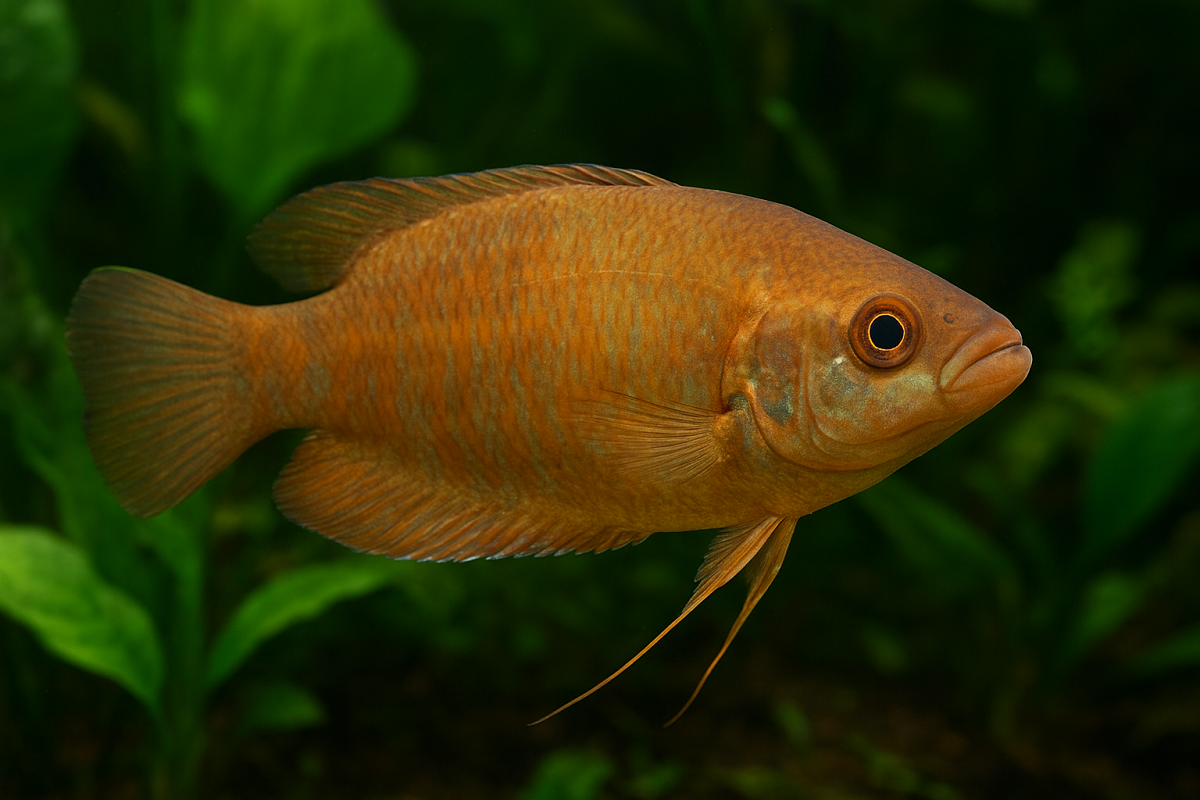
There are some fish in the aquarium world whose beauty is immediate and obvious their colors scream for attention the moment you walk past the tank. And then there are fish like the Thick Lipped Gourami a species whose charm unfolds slowly whose personality becomes more endearing every week and whose glowing copper orange tones reveal themselves quietly under the right lighting.
Known scientifically as Trichogaster labiosa the Thick Lipped Gourami is one of the most peaceful and beginner friendly labyrinth fish available. Yet despite its gentle disposition and undeniable appeal it remains surprisingly overlooked. Many aquarists gravitate toward the more famous Dwarf Honey or Pearl Gouramis without realizing that the Thick Lipped Gourami may be the perfect hidden gem they’ve been missing.
<script async type="text/javascript" src="https://n1.smartyads.com/?c=b&t=s&placementId=9622&ua=[UA]&ip=[IP]&gdpr=[GDPR]&gdpr_consent=[GDPR_CONSENT_534]&gpp=${GPP_STRING_534}&gpp_sid=${GPP_SID}&coppa=[COPPA]&page=[PAGE]&lmt=[LMT]&dnt=[DNT]&ad_width=[AD_WIDTH]&ad_height=[AD_HEIGHT]"></script>
A Quietly Beautiful Species with a Warm Natural Color Palette
The Thick Lipped Gourami is not a fish that dazzles with neon intensity instead its beauty comes from understated elegance. Its scales shimmer in earthy oranges rusty reds soft browns and warm copper hues that grow richer with age good diet and proper lighting. These colors complement natural heavily planted aquascapes in a way that far brighter species cannot. Rather than dominating the visual landscape of the tank they enrich it contributing to a harmonious organic environment that feels alive warm and balanced.
One of the most defining physical characteristics of this species is of course its thick fleshy lips. These lips give the fish a distinctive expressive look almost as if it is constantly pondering the meaning of life. They are also functional aiding the fish in grazing on algae microorganisms and tiny food particles lodged in plant surfaces. Its body shape is slightly elongated with rounded fins that move in slow sweeping motions giving it a graceful and silky swimming style.
As a labyrinth fish the Thick Lipped Gourami possesses a specialized organ that allows it to breathe atmospheric air. This adaptation enables it to thrive in warm low oxygen waters where other species would struggle. In the aquarium you are often see it rise occasionally to the surface to take a delicate gulp of air. This behavior is not only fascinating to observe but also a gentle reminder of the intricate adaptations nature develops in species living in challenging environments.
Natural Habitat
To truly appreciate the Thick Lipped Gourami its helpful to understand where it comes from. This species is native to parts of Myanmar and northeastern India where it inhabits shallow slow moving waterways. These areas often include rice paddies small lakes marshlands floodplains and gentle streams with muddy bottoms. The water is typically warm soft to moderately hard and often stained with tannins from decaying plant matter. In many places floating vegetation blankets the surface diffusing sunlight and providing shelter for small fish.
The environment is usually quiet with minimal current and filled with dense patches of submerged plants and root systems. This vegetation not only provides hiding spots but also creates microhabitats where small invertebrates thrive offering a natural buffet for the omnivorous gourami.
This habitat offers key insights into how to create an aquarium setup that encourages natural behavior stimulates healthy coloration and reduces stress for the Thick Lipped Gourami. Tanks that replicate these warm calm vegetated environments consistently produce fish that are more active peaceful and expressive.
Breeding Thick Lipped Gouramis
One of the most beautiful natural behaviors of the Thick Lipped Gourami is its bubble nest breeding ritual. Like other labyrinth fish the male constructs a floating nest using bubbles coated with mucus often anchored under floating plants.
The courtship and spawning process
Conditioning both fish with high quality foods helps trigger breeding.
The male begins bubble nest construction often taking hours to build a thick sturdy nest.
When the female is ready she displays subtle coloration changes and follows the male to the nest.
The pair engages in a spawning embrace with the male wrapping around the female as she releases eggs.
The male collects any sinking eggs in his mouth and gently places them into the nest.
The male guards the nest diligently repairing it as needed.
Fry hatch in 24 to 36 hours and become free swimming a few days later.
Once fry are free swimming remove the male to prevent accidental predation. Feed fry tiny foods like infusoria, followed by baby brine shrimp.
Breeding Thick Lipped Gouramis is a peaceful fascinating process that highlights the caring nature of labyrinth fish.
Breed Overview Chart Thick Lipped Gourami
| Category | Information |
|---|---|
| Common Name | Thick Lipped Gourami |
| Scientific Name | Trichogaster labiosa |
| Family | Osphronemidae |
| Class | Actinopterygii |
| Origin | Myanmar & India |
| Adult Size | 3 to 4 inches |
| Lifespan | 5 to 7 years |
| Temperament | Peaceful |
| Diet | Omnivore |
| Tank Size | Minimum 20 gallons |
| Water Temperature | 75 to 82°F 24 to 28°C |
| pH Range | 6.0 to 7.8 |
| Breeding Method | Bubble nest |
| Care Level | Beginner friendly |
Setting Up the Ideal Aquarium

Creating the perfect home for a Thick Lipped Gourami begins with understanding its environmental needs. Fortunately, this species is adaptable and forgiving but designing the tank thoughtfully ensures it thrives rather than merely survives.
Tank Size
A single Thick Lipped Gourami or pair can live comfortably in a 20 gallon aquarium, though more space naturally results in better territorial harmony and more natural behavior. If you are planning a community tank 29 gallons or larger is ideal as it allows plenty of room for tankmates and gives the gourami space to establish gentle territories without conflict.
Aquascaping Elements
To mirror their natural environment focus on dense planting and gentle decor
Live plants: Amazon swords crypts hygro species Java fern water wisteria and vallisneria create a lush environment.
Floating plants Frogbit, red root floaters or water lettuce offer shade and comfort for a species accustomed to dim or diffused lighting.
Driftwood and roots These provide natural hiding spots and release beneficial tannins.
Soft substrate Sand or smooth gravel works well.
Gentle flow Use low intensity filtration or baffled output too much water movement stresses this fish.
When given shaded areas, plant cover and quiet corners Thick Lipped Gouramis gain confidence and display deeper coloration.
Lighting
Moderate or slightly subdued lighting is ideal. Floating plants help achieve this creating a dappled light effect that brings out the warm tones of the fish’s body.
Water Parameters Stable
Thick Lipped Gouramis are famously hardy tolerant of a wide range of conditions and suitable for beginners. However, consistent water quality ensures longevity and prevents stress.
Temperature 75 to 82°F 24 to 28°C
pH 6.0 to 7.8
Water hardness Soft to moderately hard
Ammonia/Nitrite 0 ppm
Nitrate Below 20 ppm
Because this species comes from quiet waters avoid overly strong filters. A sponge filter or gentle hang on back filter works perfectly. The labyrinth organ does not replace the need for good water quality it merely gives the fish a breathing backup. Stability cleanliness and warmth are the keys to long term success.
Diet
In their native habitat Thick Lipped Gouramis graze on small insects larvae microorganisms plant matter algae and whatever edible material they can find on submerged surfaces. In the aquarium they readily adapt to commercial foods but a varied diet results in significantly better coloration breeding behavior and vitality.
Recommended foods include
High quality flakes or micro pellets
Frozen or live brine shrimp
Daphnia
Bloodworms offered sparingly
Bug based protein foods
Spirulina flakes
Vegetable based flakes
Blanched vegetables like peas or spinach
Feed them once or twice daily in small portions they can finish within minutes. Their slow gentle feeding style makes them ideal tankmates for other peaceful community fish.
Temperament
The Thick Lipped Gourami is among the calmest labyrinth fish available. They rarely show aggression except during breeding or when two males are kept in too small a tank. Even then, their displays are mild often limited to short flaring behaviors or gentle chasing without fin damage.
They are curious observant slow moving and surprisingly personable once they recognize their owner. Many aquarists report that their Thick Lipped Gouramis glide gracefully toward the glass during feeding times and display behaviors that feel almost interactive.
This gentle personality makes them outstanding additions to community tanks.
Excellent tankmates include
Rasboras
Tetras
Corydoras
Peaceful barbs
Guppies platies and mollies
Non-aggressive loaches
Smaller rainbowfish
Peaceful gourami species
Avoid nippy species like tiger barbs or aggressive species like cichlids that may bully the gourami.
Health and Common Issues
Thick Lipped Gouramis are robust and long lived often reaching 5 to 7 years with good care. They are resistant to disease but can be susceptible to health problems if kept in dirty or unstable conditions.
Common issues include:
Ich
Fin rot
Bacterial infections
Fungal infections
Stress related diseases
Maintaining good water quality providing nutritious food and ensuring a peaceful tank environment go a long way in preventing illness.
Frequently Asked Questions
Are Thick Lipped Gouramis good for beginners?
Yes Their hardiness peaceful temperament and adaptability make them excellent for new fishkeepers.
Can Thick Lipped Gouramis live alone?
Absolutely they do not require a group and do well solo or paired.
Do they get along with other gouramis?
Yes generally. But avoid aggressive or overly territorial gourami species.
How many can be kept together?
A pair can be kept in a 20 to 29 gallon tank. Multiple pairs require larger planted aquariums with visual barriers.
Are they prone to disease?
They are hardy but still vulnerable to Ich fin rot and infections if water quality is poor.
Do Thick Lipped Gouramis need air access?
Yes they must reach the surface to breathe with their labyrinth organ.
Will they eat shrimp?
They may eat newborn shrimp but usually leave adult shrimp alone.
What is the best tank setup?
A planted tank with floating plants soft lighting warm water and low flow.
Can they live with bettas?
Not recommended. Bettas may see them as rivals.
Are they schooling fish?
No they are not schooling fish but can coexist peacefully in community tanks.