
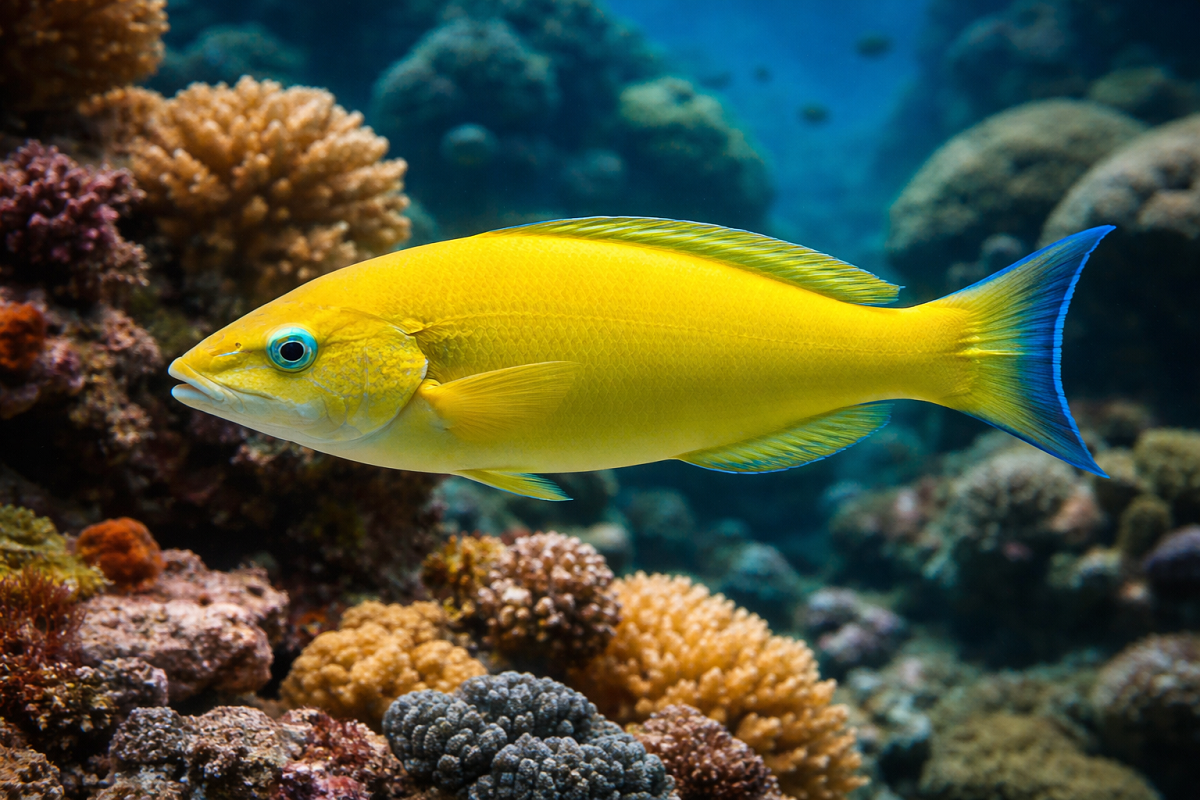
The Banana Wrasse scientifically known as Thalassoma lutescens is one of the most visually striking and energetic fish found in the marine aquarium hobby. With its unmistakable bright yellow coloration sleek torpedo shaped body and constant motion this wrasse instantly draws attention in any saltwater setup. Often referred to as the Yellow Wrasse Lutescent Wrasse or Slender Wrasse the Banana Wrasse is admired not only for its beauty but also for its intelligence, activity level and fascinating behavior.
<script async type="text/javascript" src="https://n1.smartyads.com/?c=b&t=s&placementId=9622&ua=[UA]&ip=[IP]&gdpr=[GDPR]&gdpr_consent=[GDPR_CONSENT_534]&gpp=${GPP_STRING_534}&gpp_sid=${GPP_SID}&coppa=[COPPA]&page=[PAGE]&lmt=[LMT]&dnt=[DNT]&ad_width=[AD_WIDTH]&ad_height=[AD_HEIGHT]"></script>
However despite its popularity and visual appeal the Banana Wrasse is not a beginner fish. It requires careful planning a large aquarium appropriate tankmates, and an understanding of its natural behaviors. This species can be both rewarding and challenging making it best suited for intermediate to advanced aquarists who are prepared to meet its needs.
Natural Habitat
The Banana Wrasse is native to the Indo Pacific region where it inhabits tropical coral reefs across a vast geographic range. Its distribution includes the Red Sea East Africa Indonesia Philippines Great Barrier Reef Micronesia, and parts of the Central Pacific. In the wild it is most commonly found in shallow reef flats lagoon reefs and outer reef slopes where sunlight is abundant and food sources are plentiful.
These fish typically inhabit areas with strong water movement and a complex reef structure made up of live rock coral heads and sandy patches. Juveniles tend to remain closer to sheltered reef areas while adults roam larger territories often patrolling reef faces in search of food.
The Banana Wrasse is a diurnal species, meaning it is active during the day and rests at night. Like many wrasse it buries itself in sand or wedges into rock crevices to sleep using this behavior as protection from predators. This natural instinct plays a major role in how the fish should be housed in captivity.
Physical Appearance
The most defining feature of the Banana Wrasse is its vibrant yellow coloration which gives the fish its common name. Adult specimens display a solid intense yellow body that can range from lemon to banana yellow often with subtle greenish or bluish hues under certain lighting conditions.
Juveniles however look quite different. Young Banana Wrasses are typically greenish or yellow green sometimes with faint markings or stripes. As they mature, they undergo a dramatic color transformation eventually developing the bright yellow coloration that makes adults so recognizable.
Adult Banana Wrasses can grow up to 10 to 12 inches 25 to 30 cm in length making them one of the larger wrasse species commonly available in the aquarium trade. Their size alone necessitates a large tank and careful planning.
Behavior
One of the most captivating aspects of the Banana Wrasse is its energetic and inquisitive personality. This fish is almost constantly on the move, swimming actively throughout the tank and exploring every inch of its environment. It is known for its intelligence and can quickly learn feeding routines recognize its keeper and investigate new objects added to the aquarium.
That said this active nature comes with some important considerations.
Territorial Tendencies
As the Banana Wrasse matures it can become territorial and aggressive especially toward smaller or similarly shaped fish. While juveniles are often relatively peaceful adults may display dominance behaviors chasing or harassing tankmates they perceive as competitors.
Predatory Instincts
The Banana Wrasse is a natural predator of small invertebrates. In the wild it feeds on crustaceans worms mollusks and other reef-dwelling organisms. In captivity this instinct often translates into aggression toward:
Shrimp
Crabs
Snails
Small ornamental invertebrates
For this reason the Banana Wrasse is not reef safe with invertebrates though it is generally safe with corals.
Aquarium Size and Tank Requirements

Due to its size activity level and territorial behavior the Banana Wrasse requires a large well established aquarium.
Minimum Tank Size
6″>Minimum 125 gallons 475 liters
Ideal 180 gallons or larger
Smaller tanks can lead to stress aggression and health issues. A large footprint is more important than tank height as the fish needs room to swim horizontally.
Aquascaping Considerations
A proper Banana Wrasse tank should closely mimic its natural reef environment
Live Rock Provide plenty of hiding places and exploration zones
Open Swimming Space Avoid overcrowding with rockwork
Sand Bed Fine to medium sand is essential for sleeping and stress reduction
Secure Lid Banana Wrasses are powerful jumpers and will leap from uncovered tanks
The sand bed is particularly important. Without it the fish may become stressed and exhibit abnormal behavior especially at night when it instinctively seeks a place to bury itself.
Diet
The Banana Wrasse is a carnivorous omnivore with a strong preference for meaty foods. In the wild it spends most of its day hunting small prey among the reef.
Recommended Diet in Captivity
A varied diet is essential for maintaining color energy and overall health
High quality marine pellets or flakes
Frozen mysis shrimp
Brine shrimp enriched
Chopped seafood shrimp squid clam fish flesh
Occasional live foods
Feed the Banana Wrasse 2 to 3 times per day offering small portions that it can consume quickly. These fish have fast metabolisms and benefit from frequent feedings.
A well fed Banana Wrasse is generally less aggressive as hunger can intensify territorial and predatory behaviors.
Health and Common Issues
With proper care the Banana Wrasse can live 8 to 12 years in captivity.
Common Health Concerns
Marine Ich Cryptocaryon irritans
Stress related illness due to inadequate space
Injury from jumping
Nutritional deficiencies if diet lacks variety
Quarantine new specimens before introduction and always provide a secure tank lid.
Breeding Behavior
Breeding Banana Wrasses in captivity is extremely rare. In the wild they exhibit protogynous hermaphroditism meaning individuals can change sex from female to male depending on social hierarchy.
Spawning typically occurs in open water making captive breeding impractical for home aquarists.
FAQs About Banana Wrasse
Is the Banana Wrasse reef safe?
It is safe with corals but not with shrimp or small invertebrates.
How big does a Banana Wrasse get?
Adults can reach 10 to 12 inches in length.
Does a Banana Wrasse need sand?
Yes a sand bed is essential for sleeping and stress reduction.
Is the Banana Wrasse aggressive?
It can become aggressive as it matures especially toward smaller fish.
Can beginners keep a Banana Wrasse?
No it is best suited for intermediate to advanced aquarists.
Whiptail Catfish The Elegant Understated Jewel of the Freshwater Aquarium