
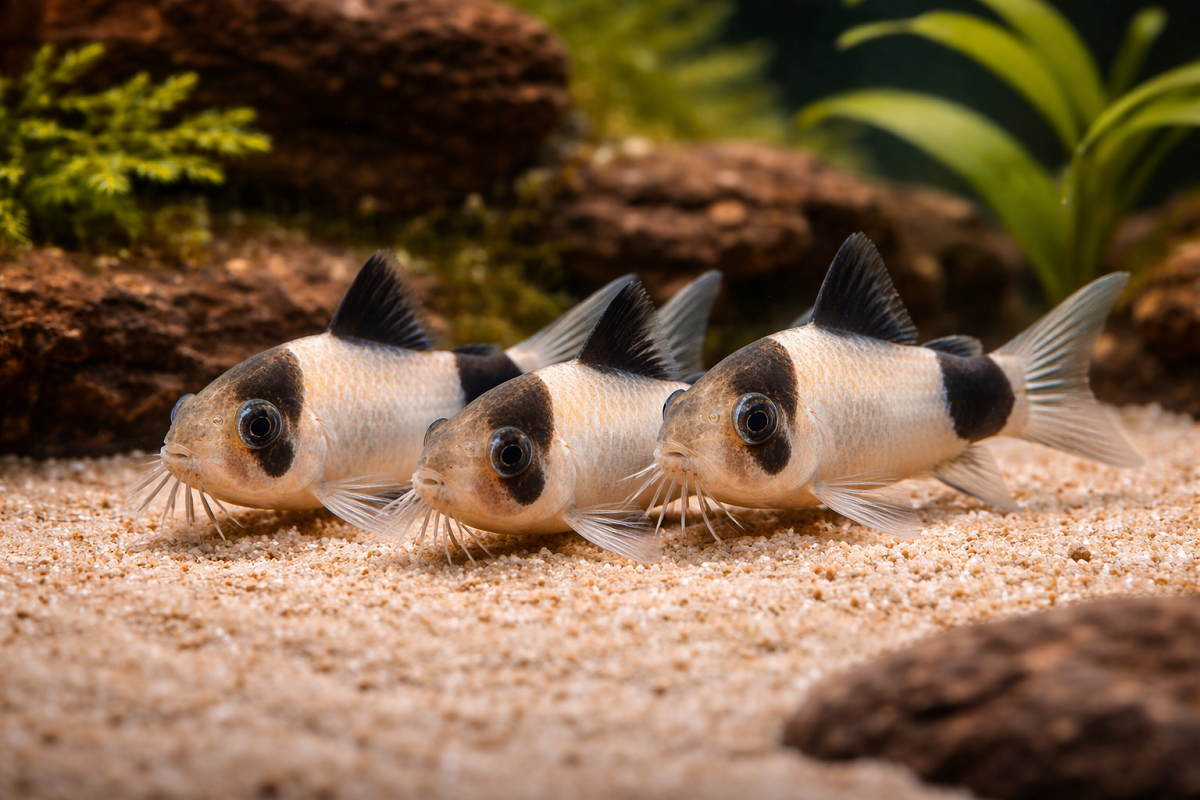
The Panda Corydoras scientifically known as Corydoras panda is one of the most beloved and recognizable freshwater catfish in the aquarium hobby. Instantly identifiable by its charming black-and white coloration that resembles a panda bear this small bottom dwelling fish has earned a reputation as both a visual delight and a peaceful hardworking community member. Despite its small size the Panda Corydoras plays a big role in freshwater aquariums contributing not only to the aesthetic appeal of the tank but also to its overall balance.
What makes the Panda Corydoras especially appealing is its combination of gentle temperament social behavior and engaging activity. Unlike many fish that remain hidden or inactive Panda Corydoras are constantly on the move gliding across the substrate in small groups sifting sand with their whisker like barbels and interacting subtly with one another. Their behavior brings life to the lower regions of the aquarium an area that often goes unnoticed in many setups.
<script async type="text/javascript" src="https://n1.smartyads.com/?c=b&t=s&placementId=9622&ua=[UA]&ip=[IP]&gdpr=[GDPR]&gdpr_consent=[GDPR_CONSENT_534]&gpp=${GPP_STRING_534}&gpp_sid=${GPP_SID}&coppa=[COPPA]&page=[PAGE]&lmt=[LMT]&dnt=[DNT]&ad_width=[AD_WIDTH]&ad_height=[AD_HEIGHT]"></script>
However while Panda Corydoras are often marketed as beginner friendly fish they do have specific needs that must be met to ensure long-term health and happiness. They are sensitive to water quality require appropriate substrate and thrive best in groups. In this comprehensive guide we will explore everything you need to know about Panda Corydoras from their natural habitat and physical traits to tank setup feeding behavior breeding and common health concerns. Whether you are a new aquarist or an experienced fish keeper this article will give you a deep understanding of what it truly means to care for Panda Corydoras properly.
Natural Habitat
Panda Corydoras originate from South America, specifically the upper Amazon River basin in Peru. In the wild they inhabit cool fast flowing tributaries and streams particularly in regions where the water is clear well oxygenated and shaded by dense vegetation. These environments are often characterized by sandy or fine gravel substrates, scattered leaf litter submerged roots and smooth stones.
Unlike many tropical fish that prefer warm stagnant waters Panda Corydoras naturally live in slightly cooler temperatures due to their proximity to Andean foothills. Seasonal rainfall plays a major role in shaping their environment causing fluctuations in water levels flow rates and food availability. During rainy seasons vast areas become flooded allowing Panda Corydoras to spread out and forage more freely.
Natural habitat is essential for recreating suitable conditions in captivity. Panda Corydoras are adapted to environments with strong oxygenation, clean water and soft substrates and they do not tolerate neglect or poor water conditions well. Their wild origins explain many of their behaviors including their love for sand their social nature and their sensitivity to environmental changes.
Physical Appearance
The Panda Corydoras is one of the most visually distinctive species in the Corydoras genus. Its coloration is both simple and striking making it easy to identify even among other similar catfish species.
Physical Characteristics
The body of the Panda Corydoras is a soft off white to pale pinkish silver overlaid with three bold black markings. One black patch covers the eyes like a mask another appears at the dorsal fin and a third marks the base of the tail. These markings are what give the fish its panda like appearance and have made it instantly recognizable among aquarists worldwide.
Panda Corydoras have a short rounded body with a slightly arched back and a flat underside designed for bottom dwelling. Instead of scales their bodies are covered with bony plates called scutes which provide protection from predators. At the front of the head they possess sensitive barbels which they use to detect food hidden in the substrate.
Adults typically grow to about 2 inches 5 cm in length making them smaller than many other Corydoras species. Despite their small size they are sturdy fish when kept in proper conditions though their delicate barbels and sensitivity to poor water quality require careful attention.
Behavior
One of the most endearing qualities of the Panda Corydoras is its gentle social and curious behavior. These fish are schooling by nature and feel safest and most comfortable when kept in groups. In the wild they are rarely seen alone and the same holds true in captivity.
Group Dynamics
Panda Corydoras should always be kept in groups of at least six though larger groups of eight to twelve individuals are even better. When kept in proper numbers their natural behaviors truly shine. You can observe them swimming together in coordinated movements resting side by side under driftwood and foraging as a group across the tank floor.
When kept alone or in too small a group Panda Corydoras often become shy stressed and inactive. Stress weakens their immune system, making them more susceptible to disease. A healthy group on the other hand is active confident and constantly exploring.
Activity Patterns
Panda Corydoras are primarily diurnal meaning they are active during the day though they may become even more lively during feeding times or under subdued lighting. They are known for their playful bursts of speed often darting to the surface for a quick gulp of air before returning to the bottom. This behavior is normal and is made possible by their ability to absorb oxygen through their intestines a fascinating adaptation that allows them to survive in oxygen poor waters in the wild.
Aquarium Size and Tank Setup
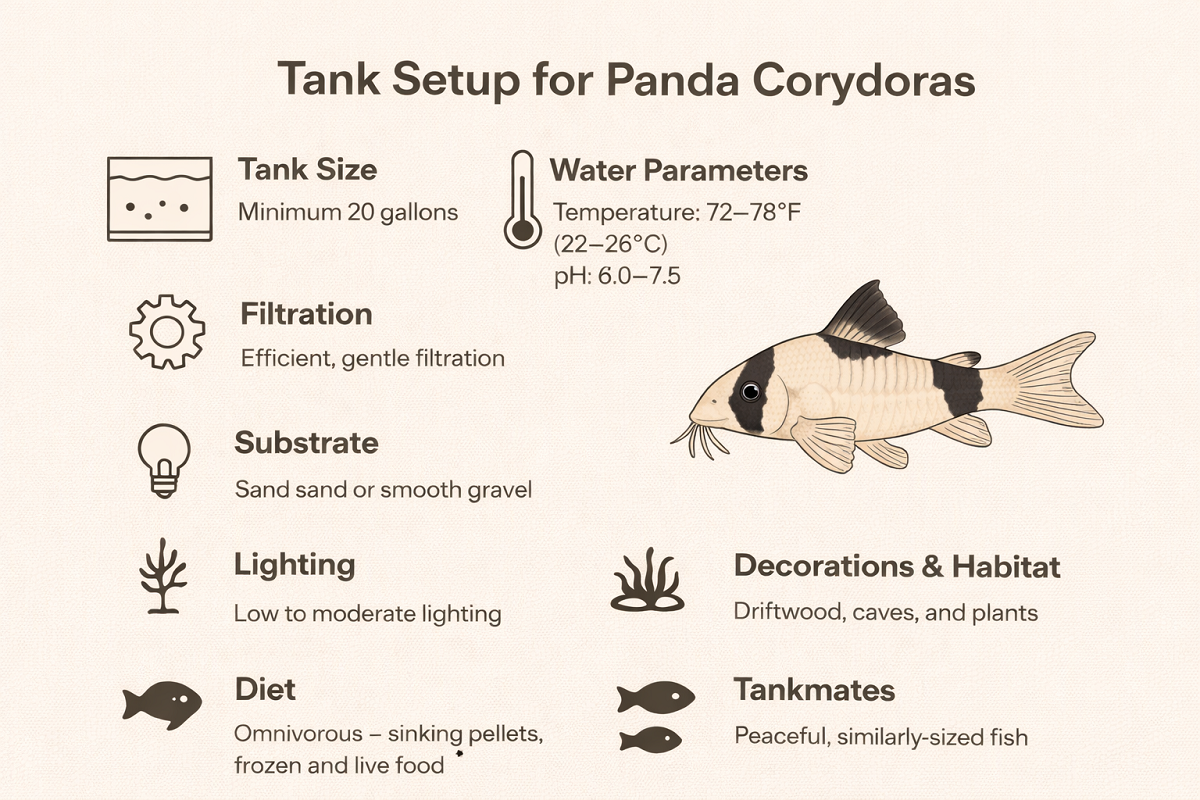
Although Panda Corydoras are small fish they should not be underestimated when it comes to space requirements. A properly sized and thoughtfully designed aquarium is crucial for their well being.
Tank Size
A group of six Panda Corydoras requires a minimum tank size of 20 gallons, though larger tanks are always preferable. A longer tank footprint is more important than height as these fish spend nearly all of their time along the bottom.
Substrate
Perhaps the single most important aspect of Panda Corydoras care is the substrate. Because they constantly sift through the bottom using their barbels sharp or coarse gravel can cause serious injuries leading to infections and permanent damage.
The best substrate options include
Fine sand
Smooth rounded aquarium sand
Very smooth micro-gravel used cautiously
Soft substrate allows Panda Corydoras to exhibit natural foraging behavior without risk keeping their barbels healthy and intact.
Decorations and Aquascaping
Panda Corydoras appreciate a natural-looking setup with
Driftwood for shelter and grazing
Smooth rocks and caves
Leaf litter such as Indian almond leaves
Live plants like Java fern Anubias Cryptocoryne and Amazon swords
Plants not only provide hiding spots but also help maintain water quality and create a calmer environment. Open areas of sand should be left clear so the fish can forage freely.
Water Parameters and Quality
Panda Corydoras are highly sensitive to water quality making consistent maintenance essential.
Ideal Water Parameters
Temperature 68 to 75°F 20 to 24°C
pH 6.0 to 7.5
Hardness Soft to moderately soft
Ammonia 0 ppm
Nitrite 0 ppm
Nitrate Below 20 ppm preferably under 10 ppm
Unlike many tropical fish Panda Corydoras prefer slightly cooler water. Prolonged exposure to higher temperatures can shorten their lifespan and increase stress levels.
Regular water changes typically 20 to 30% weekly are crucial. Because they are bottom dwellers Panda Corydoras are especially affected by waste accumulation in the substrate.
Diet
Panda Corydoras are omnivores with a strong preference for meaty foods. In the wild, they feed on insect larvae small crustaceans worms and organic matter found in the substrate.
Feeding in Captivity
A balanced diet should include
High-quality sinking pellets or wafers
Frozen or live bloodworms
Frozen brine shrimp
Daphnia
Blackworms occasionally
While Panda Corydoras do consume leftover food they should never be relied upon as clean up fish. They require direct feeding to ensure they receive adequate nutrition. Feeding once or twice daily is sufficient preferably after lights out when they are most active.
Health and Common Issues
With proper care Panda Corydoras can live 5 to 8 years though some have been known to live even longer in optimal conditions.
Common Health Concerns
Barbel erosion from poor substrate
Bacterial infections due to poor water quality
Stress-related illnesses
Sensitivity to medications especially those containing copper
Always research medications carefully as Corydoras lack scales and are more sensitive than many fish.
FAQs About Panda Corydoras
How many Panda Corydoras should be kept together?
At least six though more is better.
Do Panda Corydoras eat algae?
They may graze lightly but are not true algae eaters.
Can Panda Corydoras live with shrimp?
Yes they are generally shrimp safe.
Do they need sand?
Yes soft sand is highly recommended.
Are Panda Corydoras good for beginners?
Yes with proper care and water quality.
Banana Wrasse Thalassoma lutescens The Complete Care Behavior and Reef Guide