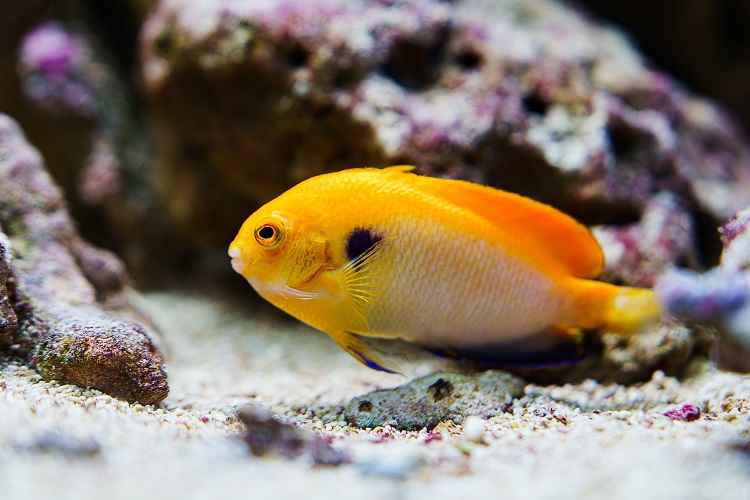

The Purple Tang fish is widely considered one of the most beautiful and desirable saltwater fish available in the marine aquarium hobby. Its brilliant purple body, bright yellow tail, active swimming behavior, and strong personality make it one of the most recognizable tang species in reef aquariums around the world. Aquarists often choose this fish as a centerpiece because it immediately attracts attention and adds vibrant color to large marine tanks.
Native to the Red Sea and nearby regions, the Purple Tang has earned a reputation for being both hardy and stunning. While it is not the easiest marine fish for complete beginners, aquarists who provide proper care can successfully keep this species for many years. The fish requires excellent water quality, a spacious aquarium, and a diet rich in marine algae to maintain its health and vivid coloration.
<script async type="text/javascript" src="https://n1.smartyads.com/?c=b&t=s&placementId=9622&ua=[UA]&ip=[IP]&gdpr=[GDPR]&gdpr_consent=[GDPR_CONSENT_534]&gpp=${GPP_STRING_534}&gpp_sid=${GPP_SID}&coppa=[COPPA]&page=[PAGE]&lmt=[LMT]&dnt=[DNT]&ad_width=[AD_WIDTH]&ad_height=[AD_HEIGHT]"></script>
One reason the Purple Tang remains so popular is its combination of beauty and activity. Unlike some fish that spend much of their time hiding, Purple Tangs constantly swim throughout the aquarium, graze on algae, and interact with their environment. Their active behavior makes them highly entertaining to observe.
What Is a Purple Tang?
The Purple Tang, scientifically known as Zebrasoma xanthurum, belongs to the surgeonfish family known as Acanthuridae. It is one of the most valuable and sought-after members of the Zebrasoma genus due to its remarkable coloration and unique appearance.
In the wild, Purple Tangs inhabit coral reefs in the Red Sea, Gulf of Aden, and nearby waters. These areas provide warm temperatures, strong currents, abundant algae growth, and complex reef structures that offer both food and shelter. The species has adapted to these environments by developing a body shape that allows it to move efficiently among rocks and coral formations.
The common name “surgeonfish” comes from the sharp spine located near the base of the tail. This spine acts as a defensive weapon against predators and competing fish. Although generally peaceful toward many species, Purple Tangs can become territorial when defending their space.
Due to their beauty and active personality, they are considered premium additions to large marine aquariums.
Natural Habitat of Purple Tang
Understanding the natural habitat of the Purple Tang helps aquarists recreate suitable conditions inside the aquarium. In the wild, these fish live in coral reef environments where water quality remains exceptionally stable throughout the year.
Purple Tangs typically inhabit depths ranging from 6 to 65 feet. They spend most of their day swimming among rocks and coral formations while grazing on algae that grow on hard surfaces. Their natural environment contains strong water movement, high oxygen levels, and plenty of natural grazing opportunities.
The Red Sea provides ideal conditions for these fish because of its warm temperatures and high salinity levels. The reefs contain abundant marine vegetation, allowing Purple Tangs to feed continuously throughout the day.
These fish usually establish territories and may defend feeding areas from other herbivorous fish. In some situations, they form loose groups, but adults often become more territorial as they mature.
Replicating these conditions in captivity helps reduce stress and supports long-term health.
Purple Tang Appearance
The Purple Tang is instantly recognizable because of its stunning coloration. The entire body displays a rich purple or violet shade that becomes even more intense under proper aquarium lighting. The tail contrasts beautifully with the body by displaying a bright yellow color.
Thin blue lines often appear along the fins and body, giving the fish additional visual appeal. Juveniles may display lighter colors, but adults develop deeper shades as they mature.
The body is compressed and disc-shaped, allowing the fish to maneuver efficiently through reef structures. Their long snout enables them to graze algae from rocks and other surfaces.
One of the most distinctive features is the sharp caudal spine located near the tail. This spine can be used defensively if the fish feels threatened.
Healthy Purple Tangs display vibrant colors, clear eyes, intact fins, and active swimming behavior.
Purple Tang Size
Purple Tangs are medium-sized surgeonfish that require significant swimming space. Juveniles sold in aquarium stores may measure only two to three inches, leading some aquarists to underestimate their adult size.
Adult Purple Tangs typically reach between eight and ten inches in length. Some exceptionally healthy specimens may grow slightly larger under ideal conditions.
Their growth rate depends upon several factors, including:
- Tank size
- Water quality
- Diet
- Stress levels
- Overall health
Fish kept in cramped aquariums often experience slower growth and increased stress. Larger aquariums allow natural swimming behavior and support healthy development.
Purple Tang Lifespan
One of the major advantages of keeping a Purple Tang is its long lifespan. With proper care, these fish commonly live between 10 and 15 years in captivity. Some individuals have survived even longer in exceptionally maintained aquariums.
Several factors contribute to longevity:
- Stable water conditions
- Proper nutrition
- Large aquariums
- Disease prevention
- Low stress levels
- Regular maintenance
Neglecting these factors can significantly reduce lifespan. Poor water quality and inadequate diets often contribute to disease and premature death.
Providing excellent care allows aquarists to enjoy these beautiful fish for many years.
Minimum Tank Size for Purple Tang
Purple Tangs require large aquariums because they are extremely active swimmers. Many beginners purchase juvenile specimens without realizing how much space adults require.
A minimum tank size of 125 gallons is generally recommended. However, many experienced aquarists prefer tanks of 180 gallons or larger to provide optimal swimming space.
Large tanks offer several advantages:
- Greater swimming area
- Improved water stability
- Reduced aggression
- Better oxygen levels
- Easier maintenance
- Increased compatibility options
Keeping a Purple Tang in a tank that is too small often leads to stress, aggression, and health problems.
Ideal Tank Setup for Purple Tang

Creating the proper aquarium environment is essential for keeping Purple Tangs healthy and active.
The aquarium should contain substantial live rock formations that provide both grazing opportunities and hiding places. These fish enjoy exploring caves, tunnels, and crevices while maintaining access to open swimming areas.
The center of the aquarium should remain relatively open to allow uninterrupted swimming. Strong water movement created by powerheads helps simulate natural reef currents and improves oxygen levels.
A protein skimmer is highly recommended because Purple Tangs produce a moderate amount of waste. Efficient filtration helps maintain excellent water quality.
Moderate to strong lighting not only benefits corals but also encourages algae growth, which provides natural grazing opportunities.
Water Parameters for Purple Tang
Maintaining stable water conditions is one of the most important aspects of Purple Tang care. Sudden changes in water chemistry can cause significant stress and increase susceptibility to disease.
Ideal water parameters include:
| Parameter | Ideal Range |
|---|---|
| Temperature | 72–78°F |
| pH | 8.1–8.4 |
| Salinity | 1.023–1.025 |
| Ammonia | 0 ppm |
| Nitrite | 0 ppm |
| Nitrate | Below 20 ppm |
| Alkalinity | 8–12 dKH |
Testing water regularly helps identify problems before they become serious.
Consistency is often more important than achieving exact numbers.
Purple Tang Diet
Purple Tangs are primarily herbivores that spend much of their day grazing on algae. Their digestive systems are designed to process plant material, making algae a critical component of their diet.
A varied diet helps maintain vibrant coloration, strong immunity, and proper growth.
Suitable foods include:
- Nori seaweed
- Marine algae sheets
- Spirulina flakes
- Herbivore pellets
- Frozen mysis shrimp
- Brine shrimp
- Seaweed-based frozen foods
- Marine vegetable preparations
Many aquarists attach seaweed sheets to clips inside the aquarium. This feeding method encourages natural grazing behavior.
Although they primarily eat plant matter, occasional protein foods provide additional nutrition.
Feeding Schedule
Purple Tangs benefit from frequent feedings because they naturally graze throughout the day.
Most aquarists feed:
- Two to three times daily
- Small portions
- Daily seaweed supplements
Insufficient feeding may lead to aggression because hungry tangs often become territorial.
Providing continuous access to algae sheets can help reduce stress and maintain proper nutrition.
Purple Tang Behavior
Purple Tangs are highly active fish that spend most of their time swimming throughout the aquarium. They constantly inspect rockwork, graze algae, and patrol their territory.
Their intelligence becomes evident through their interactions with both tank mates and their environment. Many aquarists report that Purple Tangs recognize feeding times and may even respond to their owners.
Despite their beauty, they can display territorial behavior, particularly toward fish with similar body shapes.
Behavioral characteristics include:
- Active swimming
- Algae grazing
- Territory defense
- Curiosity
- Intelligence
- Social interactions
Understanding these behaviors helps aquarists manage compatibility issues.
Are Purple Tangs Aggressive?
Purple Tangs are often considered one of the more aggressive tang species. While they can coexist peacefully with many fish, they may become territorial toward other surgeonfish.
Aggression typically occurs when:
- Tank space is limited.
- Similar fish are introduced.
- Food is insufficient.
- Territories overlap.
Introducing the Purple Tang last often reduces territorial behavior.
Larger aquariums also help minimize conflicts by providing sufficient personal space.
Best Tank Mates for Purple Tang
Choosing compatible tank mates is extremely important.
Good companions include:
- Clownfish
- Gobies
- Wrasses
- Blennies
- Foxface Rabbitfish
- Angelfish
- Cardinalfish
- Hawkfish
- Butterflyfish
Avoid housing them with multiple aggressive tangs unless the aquarium is extremely large.
Introducing tank mates carefully can improve long-term compatibility.
Reef Compatibility
Purple Tangs are generally considered reef safe. Unlike some marine fish, they rarely bother corals or ornamental invertebrates.
They usually coexist peacefully with:
- Soft corals
- LPS corals
- SPS corals
- Shrimp
- Snails
- Crabs
Their algae-eating behavior may actually benefit reef aquariums by controlling nuisance algae growth.
This makes them excellent additions to reef systems.
Common Diseases
Purple Tangs can be susceptible to several marine diseases.
Marine Ich
This disease produces white spots on the body and fins and is often triggered by stress.
Marine Velvet
Velvet is highly dangerous and can spread rapidly.
Head and Lateral Line Erosion
Poor nutrition and water quality often contribute to this condition.
Bacterial Infections
Open wounds may become infected if water quality declines.
Early diagnosis greatly improves treatment success.
Disease Prevention
Preventing illness is far easier than treating disease.
Important prevention methods include:
- Quarantining new fish
- Maintaining excellent water quality
- Feeding nutritious foods
- Reducing stress
- Performing regular maintenance
- Avoiding overcrowding
Healthy fish with strong immune systems are more resistant to disease.
Breeding Purple Tang
Breeding Purple Tangs in home aquariums remains extremely difficult.
In nature, they spawn in open water during specific environmental conditions. Eggs drift with ocean currents until larvae develop.
The tiny larvae require specialized foods and conditions that are difficult to replicate.
Most Purple Tangs sold in the aquarium trade are still collected from the wild.
Research into captive breeding continues to improve.
Maintenance Requirements
Regular maintenance ensures long-term success.
Weekly tasks include:
- Water testing
- Cleaning equipment
- Water changes
- Removing debris
- Checking filtration systems
Most aquarists perform water changes of 10–15% every week.
Consistent maintenance promotes health and stability.
Advantages of Keeping a Purple Tang
Purple Tangs offer numerous benefits.
Their advantages include:
- Stunning colors
- Active personality
- Long lifespan
- Reef compatibility
- Algae control
- Intelligent behavior
- Strong visual appeal
Few marine fish provide the same combination of beauty and personality.
Frequently Asked Questions
How big does a Purple Tang get?
Adult Purple Tangs usually reach 8–10 inches.
Are Purple Tangs reef safe?
Yes, they are considered reef safe.
What size tank do they need?
A minimum of 125 gallons is recommended.
What do Purple Tangs eat?
They primarily eat algae, seaweed, and herbivore foods.
How long do they live?
They can live 10–15 years with proper care.
Are they aggressive?
They can be territorial toward other tangs.
Reference Links
- https://www.liveaquaria.com
- https://www.fishbase.se
- https://www.reef2reef.com
- https://www.thesprucepets.com
- https://www.aquariumsource.com