
The Skunk Clownfish (Amphiprion akallopisos) is one of the most elegant and underrated clownfish species found in the marine aquarium hobby. While many aquarists are familiar with the popular Ocellaris and Percula Clownfish, the Skunk Clownfish offers a unique appearance and temperament that makes it an excellent choice for both beginner and experienced saltwater fish keepers. Its slender body, peaceful nature, and distinctive white stripe running from its nose to the base of its tail give it a graceful appearance that stands out in reef aquariums.
Native to the warm coral reefs of the Indo-Pacific Ocean, the Skunk Clownfish has adapted to life among sea anemones, where it enjoys protection from predators and access to food. These fascinating fish have become increasingly popular among reef enthusiasts because they are hardy, reef-safe, and generally less aggressive than many other clownfish species. Their manageable size and ability to thrive in captivity make them suitable for a wide range of marine aquarium setups.
<script async type="text/javascript" src="https://n1.smartyads.com/?c=b&t=s&placementId=9622&ua=[UA]&ip=[IP]&gdpr=[GDPR]&gdpr_consent=[GDPR_CONSENT_534]&gpp=${GPP_STRING_534}&gpp_sid=${GPP_SID}&coppa=[COPPA]&page=[PAGE]&lmt=[LMT]&dnt=[DNT]&ad_width=[AD_WIDTH]&ad_height=[AD_HEIGHT]"></script>
Like all marine fish, however, Skunk Clownfish require proper care, stable water conditions, and a nutritious diet to remain healthy. Understanding their natural behavior and environmental needs is the key to long-term success. This comprehensive guide explores every aspect of Skunk Clownfish care, including habitat, appearance, tank setup, feeding, breeding, compatibility, common diseases, lifespan, and expert care tips.
Skunk Clownfish Overview
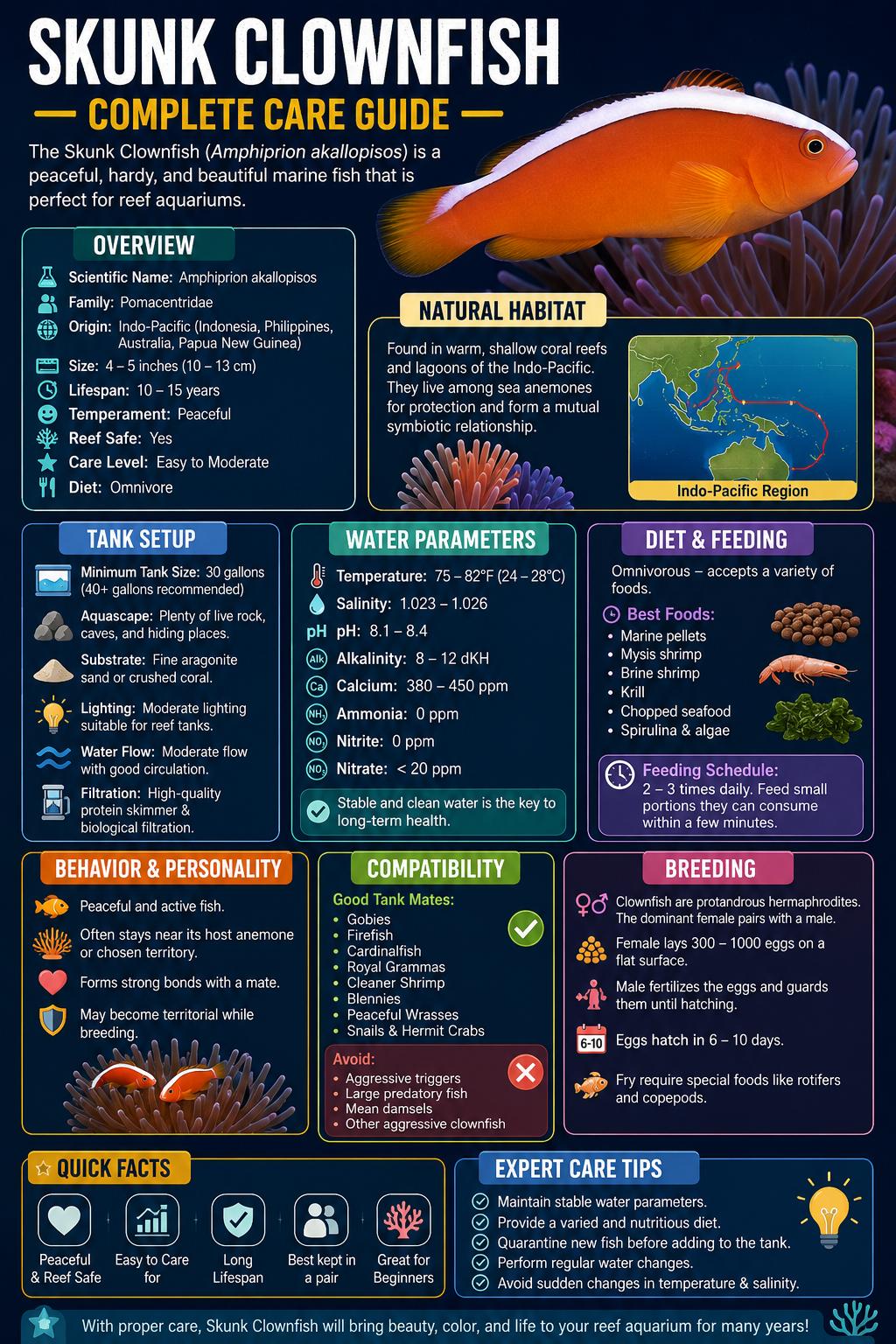
| Feature | Details |
|---|---|
| Common Name | Skunk Clownfish |
| Scientific Name | Amphiprion akallopisos |
| Family | Pomacentridae |
| Origin | Indo-Pacific Ocean |
| Adult Size | 4–5 Inches |
| Lifespan | 10–15 Years |
| Temperament | Peaceful |
| Diet | Omnivore |
| Reef Safe | Yes |
| Care Level | Easy to Moderate |
| Minimum Tank Size | 30 Gallons |
| Water Temperature | 75–82°F (24–28°C) |
Natural Habitat and Distribution
The Skunk Clownfish is naturally distributed throughout the tropical Indo-Pacific region. It can be found in countries and island chains such as Indonesia, Papua New Guinea, the Philippines, the Solomon Islands, Fiji, and parts of Australia’s Great Barrier Reef. These areas are known for their extensive coral reef systems, warm temperatures, and rich biodiversity. The fish typically inhabit shallow lagoons, reef slopes, and protected coral reef environments where conditions remain relatively stable throughout the year.
In the wild, Skunk Clownfish are most often associated with sea anemones. Unlike many fish species that avoid the stinging tentacles of anemones, clownfish possess a special mucus coating that protects them from being stung. This adaptation allows them to live among the tentacles safely while gaining protection from predators. In return, the clownfish help clean the anemone, provide nutrients through waste, and increase water circulation around the host.
These reef environments are characterized by crystal-clear water, strong biological diversity, and abundant food sources. Small planktonic organisms, algae, and tiny crustaceans are readily available for feeding. The stable temperatures and high oxygen levels found in these natural habitats explain why maintaining consistent water quality is so important in captivity. When aquarists replicate these conditions successfully, Skunk Clownfish often thrive and display their most natural behaviors.
Physical Appearance and Identification
The most recognizable feature of the Skunk Clownfish is the narrow white stripe that runs continuously along the top of its body. Beginning at the mouth, this stripe extends over the head and along the dorsal region to the tail. This unique marking resembles the stripe found on a skunk, which is how the fish earned its common name.
Unlike Ocellaris Clownfish and Percula Clownfish, Skunk Clownfish lack the bold vertical white bars commonly associated with clownfish. Instead, their streamlined coloration gives them a more elegant and sophisticated appearance. Their body color ranges from light orange and peach to pinkish-orange depending on their geographic origin and individual genetics.
Adult females are significantly larger than males, often reaching lengths of up to five inches. Males typically remain smaller, usually around three to four inches. This size difference plays an important role in their social hierarchy and breeding behavior. Like all clownfish species, they are protandrous hermaphrodites, meaning males can transform into females under specific circumstances.
Behavior and Personality
One of the greatest advantages of keeping Skunk Clownfish is their peaceful personality. Compared to more aggressive clownfish species such as Maroon Clownfish or Tomato Clownfish, Skunk Clownfish tend to be much calmer and easier to manage in community aquariums.
In the wild, these fish often live in small social groups centered around a host anemone. A dominant female leads the group, followed by a breeding male and several smaller subordinate fish. This social structure helps reduce conflict and maintain stability within the group.
In home aquariums, Skunk Clownfish usually establish a territory around a chosen area of the tank. This may be a sea anemone, coral colony, cave, or section of live rock. Once settled, they spend much of their time swimming near their chosen home and defending it from perceived threats.
Why Skunk Clownfish Are Popular in the Aquarium Hobby
The popularity of the Skunk Clownfish continues to grow for several reasons. First and foremost is their attractive appearance. The elegant white dorsal stripe combined with their vibrant orange coloration creates a visually striking fish that adds beauty to any marine aquarium.
Another reason for their popularity is their relatively peaceful nature. Many marine hobbyists prefer fish that can coexist harmoniously with other tank inhabitants. Skunk Clownfish are generally less aggressive than other clownfish species, making them easier to integrate into community reef systems.
Their hardiness is also a significant advantage. Captive-bred specimens adapt readily to aquarium life and typically accept prepared foods with little difficulty. This adaptability makes them suitable for aquarists who may be relatively new to marine fish keeping.
The fascinating relationship between clownfish and sea anemones further increases their appeal. Watching a clownfish interact with its host anemone is one of the most iconic experiences in marine fish keeping.
Ideal Tank Setup for Skunk Clownfish

Creating the right environment is essential for maintaining healthy and stress-free Skunk Clownfish. Although they are relatively hardy, they still require stable marine conditions and an appropriately designed aquarium.
Tank Size Requirements
A minimum tank size of 30 gallons is recommended for a single fish or bonded pair. However, larger aquariums are generally preferable because they provide greater stability and more swimming space. Tanks between 40 and 75 gallons are often considered ideal for long-term success.
Larger aquariums dilute waste more effectively, reduce territorial disputes, and allow for a greater variety of compatible tank mates.
Aquascaping and Live Rock
Live rock serves as the foundation of most successful reef aquariums. It provides biological filtration, hiding places, and natural territories for fish. Skunk Clownfish appreciate rock structures that mimic their natural reef habitat.
Aquascaping should include caves, overhangs, and open swimming areas. These features help reduce stress while encouraging natural exploration and territorial behavior.
Lighting and Water Flow
Lighting requirements depend largely on whether the aquarium contains corals or anemones. Fish-only systems can utilize standard marine lighting, while reef aquariums typically require more powerful lighting systems designed to support coral growth.
Moderate water movement is ideal. Proper circulation ensures oxygenation, prevents debris accumulation, and distributes nutrients throughout the aquarium. Strong but not excessive flow closely mimics the conditions found on tropical coral reefs.
Water Parameters and Maintenance
Water quality is one of the most important factors influencing the health of marine fish. Unlike many freshwater species, saltwater fish are less tolerant of sudden changes in water chemistry.
Ideal water parameters include:
| Parameter | Recommended Range |
|---|---|
| Temperature | 75–82°F |
| pH | 8.1–8.4 |
| Salinity | 1.023–1.026 |
| Ammonia | 0 ppm |
| Nitrite | 0 ppm |
| Nitrate | Below 20 ppm |
Regular testing helps identify potential issues before they become serious. Weekly water changes of 10–20% help maintain water quality while replenishing important trace elements.
Consistent maintenance routines contribute significantly to the long-term health and longevity of Skunk Clownfish.
Feeding and Nutritional Requirements
Skunk Clownfish are omnivorous and benefit from a varied diet. In the wild, they consume plankton, algae, tiny crustaceans, and other small organisms drifting through reef currents.
In captivity, a balanced feeding regimen should include high-quality marine pellets, flakes, frozen mysis shrimp, enriched brine shrimp, chopped seafood, and marine algae preparations. Offering multiple food sources ensures the fish receive all essential nutrients required for growth, immune function, and vibrant coloration.
Feeding should occur two to three times daily for adults. Juveniles may benefit from more frequent meals due to their higher growth requirements. Small portions are preferable because overfeeding can quickly degrade water quality.
A diverse diet not only supports physical health but also encourages natural feeding behaviors. Fish receiving proper nutrition tend to exhibit stronger coloration, improved disease resistance, and higher breeding success.
Do Skunk Clownfish Need a Host Anemone?
One of the biggest misconceptions surrounding clownfish is that they require an anemone to survive. While Skunk Clownfish naturally associate with sea anemones in the wild, they can thrive perfectly well without one in captivity.
Many captive-bred specimens have never encountered an anemone and adapt easily to aquarium life. Instead, they often adopt corals, rock formations, powerheads, or other structures as surrogate hosts.
Anemones can certainly enhance the natural appearance of a reef aquarium and encourage fascinating clownfish behaviors. However, they require stable water conditions, mature aquariums, and specialized lighting. For beginners, keeping Skunk Clownfish without an anemone is often the safer and more practical option.
The fish’s overall health depends far more on water quality, nutrition, and stress reduction than on the presence of an anemone.
Best Tank Mates for Skunk Clownfish
Skunk Clownfish generally coexist well with many peaceful reef-safe species. Their mild temperament makes them suitable for community marine aquariums.
Excellent tank mates include Gobies, Firefish, Royal Grammas, Cardinalfish, Chromis, Blennies, Fairy Wrasses, and various reef-safe shrimp species. These fish occupy different areas of the aquarium and rarely compete directly for territory.
Avoid housing them with highly aggressive fish such as large triggers, groupers, aggressive damsels, or predatory species that may view them as food.
Proper stocking choices reduce stress and contribute to a more harmonious aquarium environment.
Frequently Asked Questions
How big do Skunk Clownfish get?
Most adults reach between 4 and 5 inches in length.
Are Skunk Clownfish beginner friendly?
Yes. They are considered one of the easier marine fish species to maintain.
Do they need an anemone?
No. They can live healthy lives without a host anemone.
Are they reef safe?
Yes. Skunk Clownfish are generally considered completely reef safe.
How long do they live?
With proper care, they commonly live between 10 and 15 years.
Can they be kept in pairs?
Yes. Bonded male-female pairs are commonly kept together successfully.
What do they eat?
They consume marine pellets, frozen foods, algae-based foods, and various meaty marine preparations.
Are they aggressive?
They are among the most peaceful clownfish species available.
References
- FishBase – https://www.fishbase.se
- NOAA Coral Reef Conservation Program – https://coralreef.noaa.gov
- Smithsonian Ocean Portal – https://ocean.si.edu
- Reef2Reef Community – https://www.reef2reef.com